
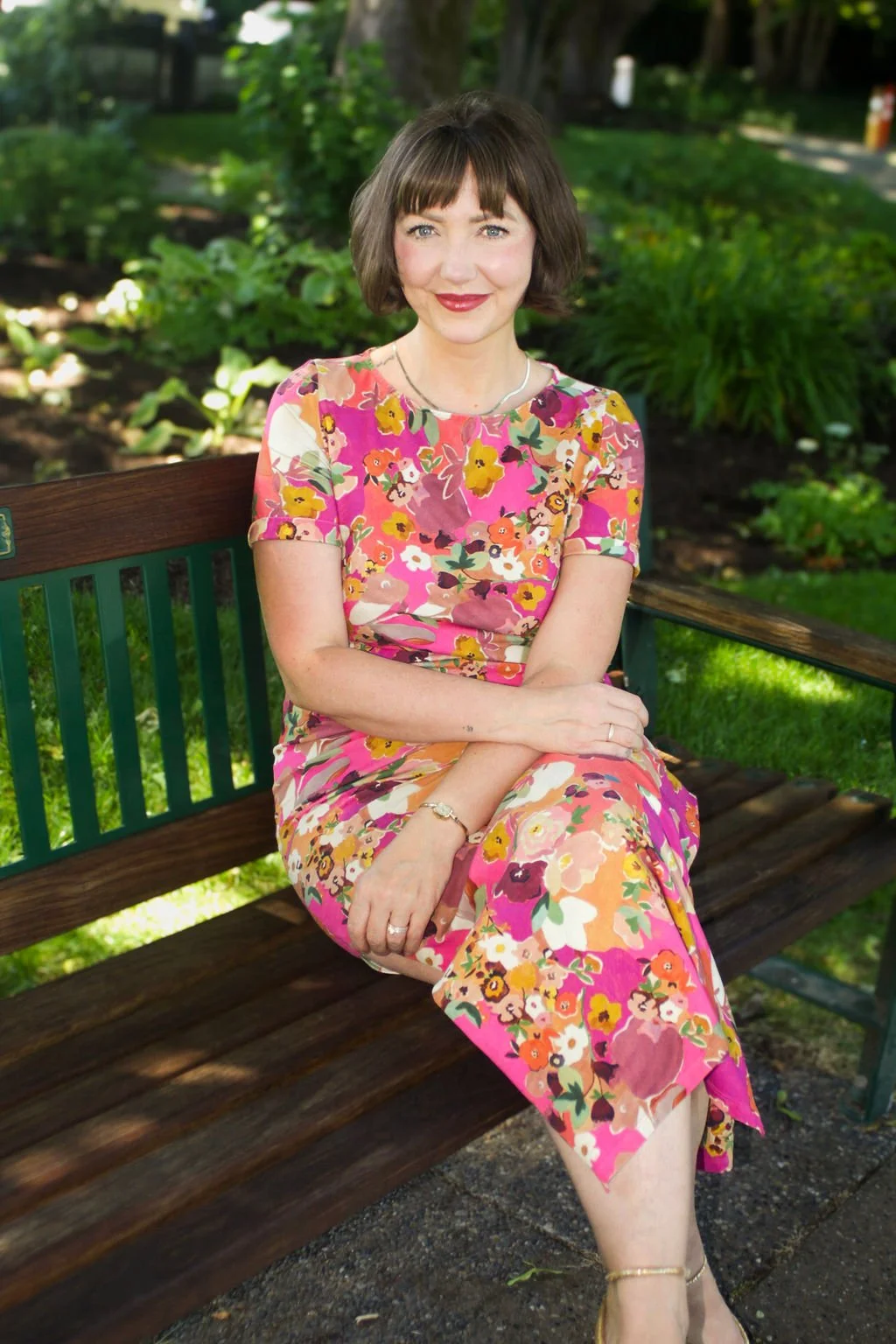
Token Mahil, Founder
Token has spent over 20 years working across British Columbia's mental health, crisis response, and social services systems, including psychiatric inpatient care, harm reduction in Vancouver's Downtown Eastside, and community mental health in some of the province's highest-need environments. She’s also worked as a programme manager for one of Surrey's largest non-profit social service organisations, overseeing multiple community mental health programs and the teams delivering them. She lives with depression, not as a footnote, but as part of what makes her training land differently. The curriculum is certified. What she brings to it, professional and personal, gives it weight.
She built Atelier because of what she kept seeing: people inside mental health and social services quietly struggling themselves, without the language or permission to say so. She wanted to give people, in any workplace, the tools to recognize that struggle in themselves and each other, and the capacity to actually do something about it.
This isn't about awareness for its own sake. It's about giving people the capacity to act, and a community so no one has to carry it alone.
Why Atelier
'Atelier' is a French word for workshop, and I chose it on purpose. Not a lecture hall, not a classroom, somewhere things are made slowly, by hand, through practice. That's what I want this training to feel like too: less sitting and absorbing, more building something real, together.
The owl felt like the right companion for that. Across a lot of ancient cultures, she's a symbol of wisdom, most famously perched on Athena's shoulder in Greek mythology. But what struck me more is the practical reason she earned that reputation: owls can actually see clearly in the dark, when almost nothing else can.
That's not just a nice metaphor, it's the whole point of mental health literacy. So much of struggling happens quietly, privately, in the moments other people aren't looking closely enough to notice. Learning to recognize the early, subtle signs, in someone else or in yourself, is its own kind of night vision. It's not magic, it's a skill. And it's one you can actually build.
There's no shortage of mental health training out there. What's harder to find is training led by someone who's spent over twenty years working inside the systems it addresses, not just studying them from the outside... crisis response, harm reduction, inpatient psychiatry, community mental health, I've been in the room for most of it.
Every program is grounded in evidence-based research, and you don't need a background in mental health to be here. Curiosity, concern for someone you care about, or a role that puts you close to people who are struggling is reason enough.
So, welcome. Settle in, get comfortable. I'm really glad you're here.

Certified facilitator, Mental Health First Aid and The Working Mind (Mental Health Commission of Canada / Opening Minds)
Registered CPD Provider, Law Society of British Columbia; LSO Approved Professionalism accreditation for TWM Legal
Naloxone Training, BCCDC TToward the Heart
Registered Supplier, Province of British Columbia and Government of Canada
Credentials
In Their Words
"Token is an excellent facilitator who presented the content in a way that was engaging, relatable, and easy to retain. She took the time to truly listen and understand participants, which created a sense of validation and trust."
— Rob Valerio, BBA, Manager of Health & Safety
-
Her name, Token Elizabeth, was given with intention: a token of love from her parents. She's spent a lifetime explaining it, to government offices who default to Mr. Mahil, to people who assume she was conceived on a bus, to government officials who ignore Token altogether and simply jump to Elizabeth. She's learned to laugh about it. But her name has also taught her something she never forgets: being seen doesn't just happen. Someone has to decide you're worth noticing. Her parents did that for her, and she's spent her career doing it for everyone else.
She's worked in some of the most demanding corners of mental health and social services in British Columbia. These settings may be unfamiliar to you, but the feeling of not knowing what to do when someone struggling is standing in front of you will be all too familiar.
The systems that are supposed to catch people are frequently broken or difficult to navigate, and she knew it firsthand. There are limits to what any one person can do, and she felt those limits deeply. What she learned, slowly and at some cost, was that when you can't fix things, how you show up for people matters more than you'd think. When people are facing their hardest moments they don't always need solutions. They need someone with the confidence to be present, the skills to respond without causing harm, and the humanity to make them feel worth showing up for. This is what she builds in every training she delivers. Not theory. Experience.
Token lives with depression and shares this openly. Not because it's required, but because once, an older gentleman pulled her aside after a training and told her that hearing her say it out loud had given him the courage to say it too. He'd lived with depression for over 40 years. It was the first time he hadn't felt ashamed of it. This is the weight she's trying to help lift: the shame that keeps people silent, the silence that keeps people alone. One interaction at a time.
When she's not in a training room, Token can usually be found with a watercolour brush in hand, sharing the couch with her two one-eyed cats, one two-eyed cat and one dog who thinks he owns it.