
Response Ready
Overdose Recognition & Naloxone Training
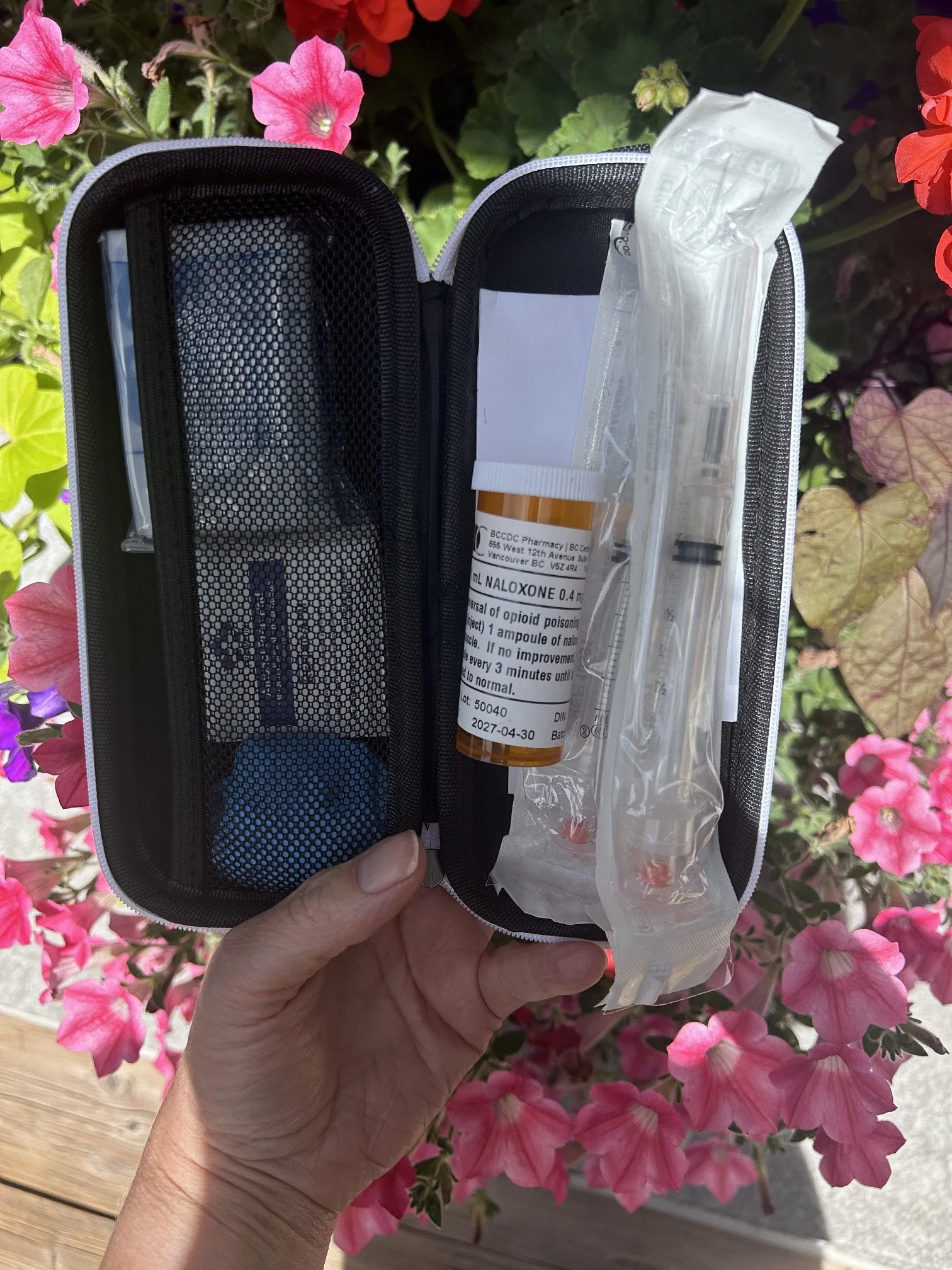
Two hours. One skill. A life saved.
Some people call it overdose response training. The people who've used it call it the training that made the difference when it mattered most.
An opioid overdose can happen anywhere - on a job site, in a workplace bathroom, on a street outside your building, on a transit platform, a school hallway, in a campus common area. Knowing what to look for and what to do in those first critical minutes can mean the difference between life and death. This training takes the fear out of responding - not because overdose isn't serious, but because fear is what keeps people frozen when someone needs them most.
Naloxone training is harm reduction in its most direct form. It doesn't ask why someone is using - it just keeps them alive long enough for what comes next to be possible.
Naloxone works. The only question is whether someone nearby knows how to use it. This training answers that question.
7,146
Canadians lost their lives to opioid overdose in 2024 - an average of 20 people every single day
Public Health Agency of Canada, 2025
80%
of those deaths occurred in just three provinces - British Columbia, Alberta, and Ontario
Public Health Agency of Canada, 2025
98.1%
of people who received bystander-administered naloxone in BC survived their overdose
PLoS ONE / UBC / BCCDC, 2021
Every one of those 98.1% survived because someone showed up prepared.
This training makes sure your team can be that person.
Why This Is Not a
First Aid Course
There are excellent organisations that teach naloxone as part of a first aid curriculum. The content is medically accurate. The framing is different - and that difference is what determines whether someone actually responds in the moment.
First aid training teaches you what to do. Harm reduction training teaches you to understand what is actually happening - to the person in front of you, to yourself as a responder, and to the moment itself.
The barrier to responding to an opioid overdose is almost never the procedure. It's the seconds before - the hesitation, the doubt, the questions that race through a person's mind before they act. Is this really an overdose? Am I sure enough to intervene? Does this person deserve my help?
Harm reduction answers those questions before they become hesitation. It's direct about stigma, honest about opioid use without judgment, and unequivocal that a human life is never a judgment call.
This training uses Toward the Heart and BCCDC materials - BC's own provincial harm reduction framework. It covers the pharmacology of naloxone precisely. It also covers the whole moment - including the human parts a first aid course doesn't have space for.
The result isn't just knowledge. It's the person who steps forward.
After Two Hours
You'll learn to recognise the signs of an opioid overdose, understand how naloxone works and why it's safe to use, and practise administering it with confidence using the SAVE ME steps. You'll leave knowing not just what to do, but how to stay present and focused while you do it.
Hands-on practice with demonstration supplies is included in every session.
A prepared team
Every staff member leaves knowing what to do - and willing to do it. Not because an emergency is likely. Because when it happens, you'll already have the people who can respond.
A culture that doesn't look away
Naloxone training signals something to your team about what kind of organisation you are. One that takes the reality of the opioid crisis seriously, without judgment, and without leaving people to figure it out alone.
A complete approach
Pair this training with MHFA Essentials and your team has the skills to respond to a mental health crisis and an overdose emergency. Two courses. One very prepared team.
Why Token
Token has spent 20+ years working across mental health, crisis response, addictions, and social services in British Columbia - including direct harm reduction work in some of the most high-need environments in the lower mainland. She meets people where they are, without judgment, and with the practical tools to make a difference in the moment.
During the pandemic she worked within BC's federally funded COVID-19 Safe Voluntary Isolation Sites programme, supporting unhoused people through crisis - including overdose response. It was a period when isolation measures, disrupted drug supply chains, and reduced access to support services drove overdose deaths in BC to record levels - making the work inside those sites more urgent than it had ever been.
BC's overdose crisis isn't abstract to her. It's the senior behind the mall, the young man near the Dairy Queen, the stranger on the side of the road. She carries naloxone with her at all times - because in BC, the moment can find you anywhere.
When she teaches this training, the fear in the room changes. She's pulled over on an ordinary day, in an ordinary part of the city, and done exactly what this training prepares you to do. That experience is in the room with you. And it changes everything about how you leave it.
Knowing how to use naloxone is only part of the equation. Having it on hand when the moment arrives is the other. Token will help your organisation figure out exactly what you need and how to get it.
Non-profit organisations working with people who use substances
Your organisation may be eligible for the BCCDC Facility Overdose Response Box programme which provides naloxone and supplies to staff at no cost. Token will help you assess eligibility, understand the application process, and prepare for the conversation with your regional Health Authority. Contact hello@ateliermhl.ca to discuss.
Private sector organisations - trades, construction, transit, corporate workplaces, schools, post-secondary institutions, and hospitality and retail teams
Every participant who completes this training is eligible to receive a free naloxone kit - injectable or nasal - at over 2,400 locations across BC including most community pharmacies, without a prescription. Token provides every participant with a pharmacy guide that walks them through exactly what to ask for and where to go.
For organisations that want naloxone on site beyond the training day, Token will walk you through the practical decisions - what to get, how many, and where to put it so it's there when someone needs it.
Getting Naloxone For Your Organisation
Book Your Spot
Two hours · Organisational bookings only.
Delivered using Toward the Heart and BCCDC training materials - BC's provincial harm reduction framework - by an experienced naloxone trainer
with a career spanning mental health, harm reduction, crisis response, and social services across the lower mainland, British Columbia.
Contact hello@ateliermhl.ca to discuss booking for your team.